

The Uniform Visual Workspace is where digital teams compose, preview, and ship experiences built from every connected source: CMS content, commerce, customer data, search, and your own APIs, and where everything that ships, whether a human made it or Scout did, gets reviewed and approved.

Composable stacks made every capability best-of-breed and made the experience itself invisible: the hero lives in the CMS, the products in commerce, the offer logic in a third tool, and the only place they meet is a staging environment after a developer assembles them. Five tabs, three systems, one experience nobody can see whole until it is almost too late to change. The Visual Workspace is where the composed experience becomes visible, editable, and approvable in one place, before it ships.
On the left, one experience split across three tools: the CMS holds the hero, commerce holds the product list, an offer engine holds the logic, and no tool shows the result. On the right, the same three sources assembled on a single canvas, previewed and approved as one experience.
Left: one experience split across three tools. Right: the same sources assembled, previewed, and approved on one canvas.
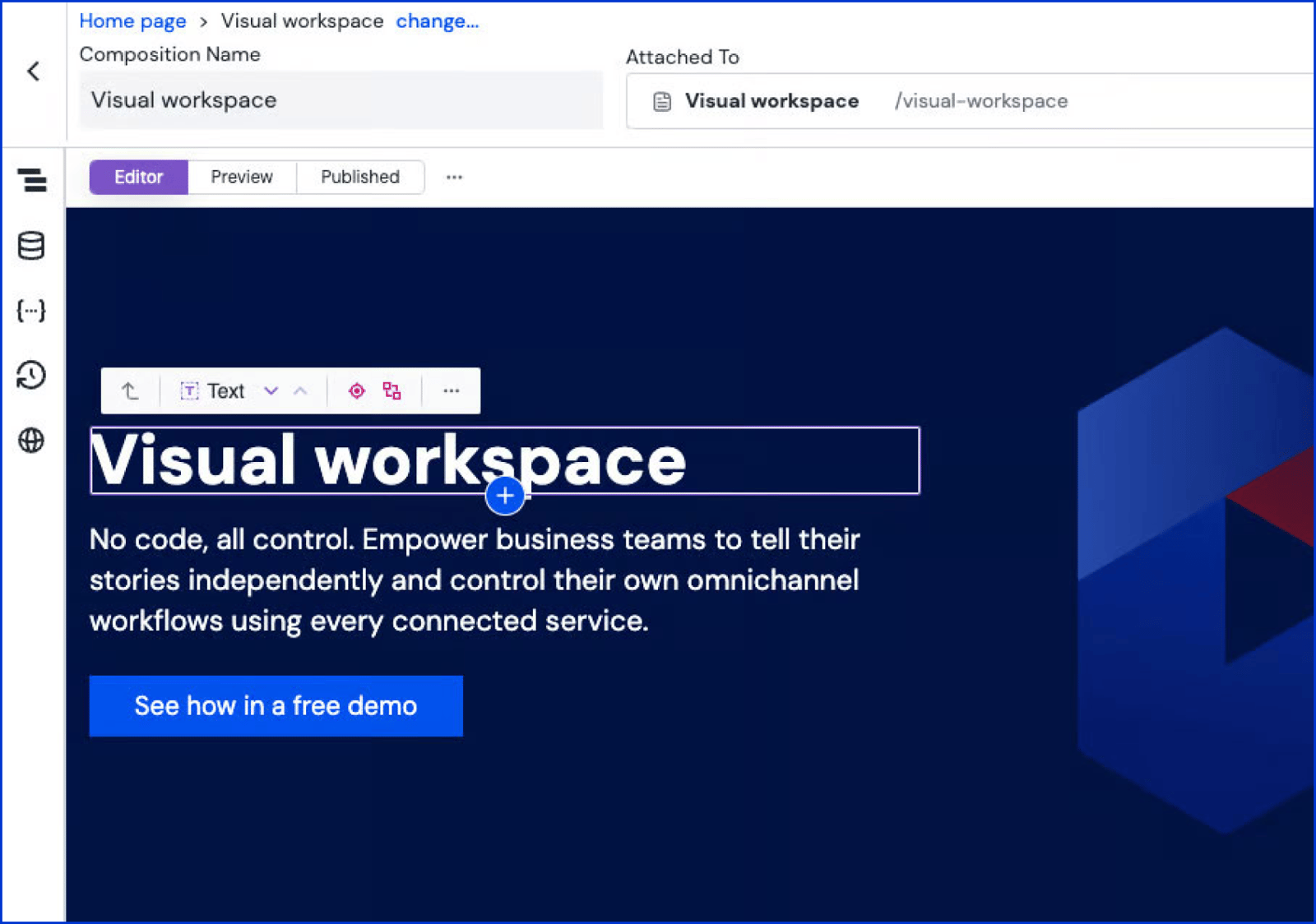
Components powered by CMS content, commerce products, customer data, search, and your own APIs, arranged and edited together, with drafts and published states previewed side by side.
Compose and edit CMS, commerce, customer data, search, and API-powered components together, then preview drafts and published states side by side.
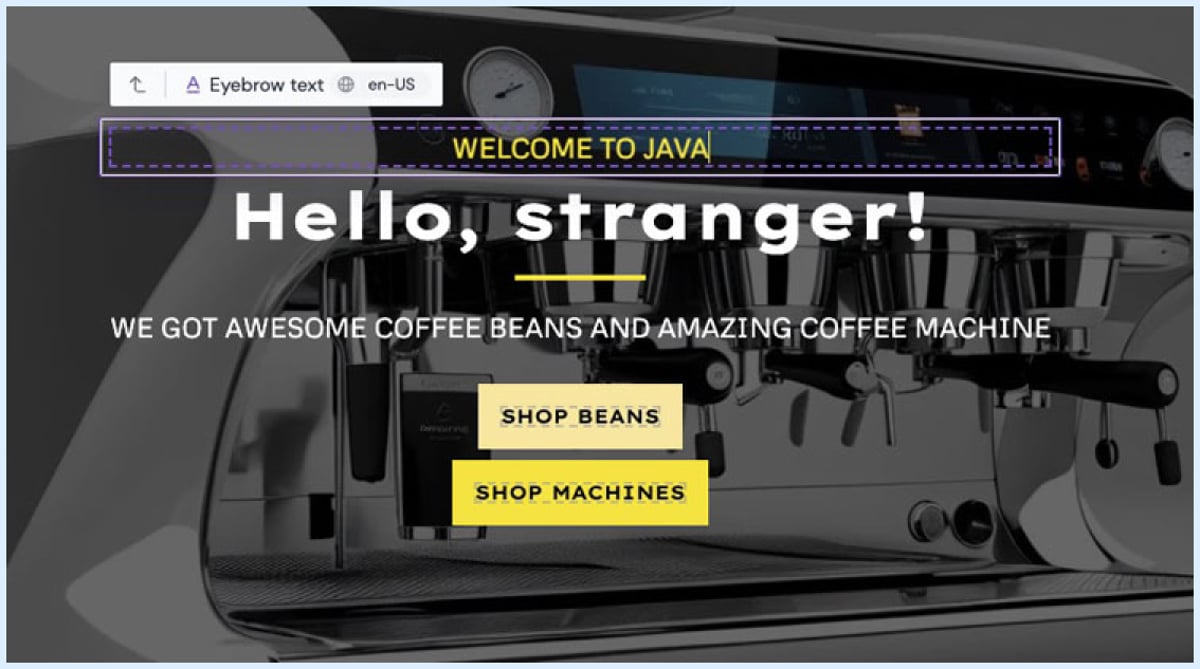
Select any component and edit only what it exposes. Developers decide which properties are open, so speed never costs control.

The same component serves new purposes by remapping its data: the product carousel can become the event-speaker carousel without a ticket, a design request, or a new build.
The component name does not change. Only the data source does.
Remap the data, and the same component becomes a new experience—no ticket, design request, or rebuild.
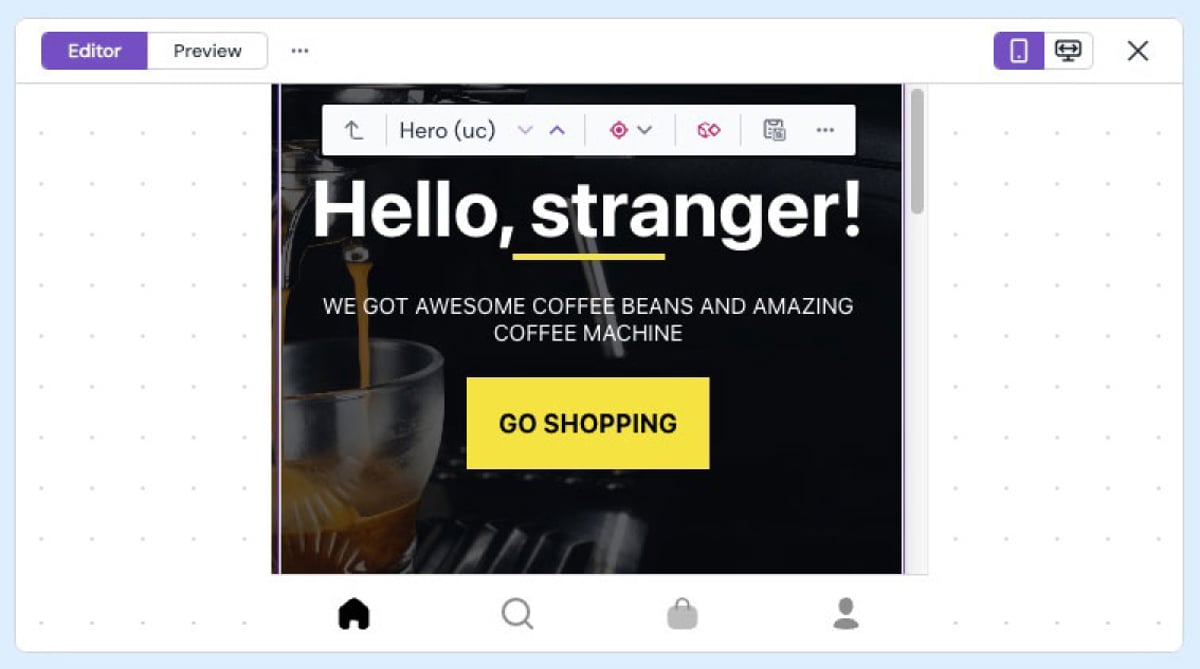
Apps, kiosks, and other digital surfaces are composed and managed visually from the same workspace.

The content lives in a best-in-class headless CMS (or the CMS you currently run); the workspace is where experiences happen.
Content management in UniformComponents and design system are defined by your developers once: every experience is assembled from approved, on-brand building blocks, so creative freedom operates inside the system, never around it.
Roles and permissions are granular: who edits, who approves, who publishes, per content type and per experience, with clear lines of responsibility.
Workflows are yours to shape: draft, review, approve, schedule, with releases that take pages, components, and content live together.
This is why the Visual Workspace scales to enterprises. The freedom is real because the walls are real.
Every agentic story on this site ends the same way: humans approve what ships. This is the room where that happens. When Scout drafts a campaign, generates variants, retags a library, or rolls out a personalization, the work lands here composed, previewable, and reviewable as the actual experience.
Scout's output arrives as staged compositions and changes you can see, walk through, and edit before anything goes live.
Autonomy is dialed per task: routine changes flow through with review before publish, brand-critical work waits for explicit approval, and the dial moves as intervention rates fall.
Agent work is attributable, logged, and reversible, in the same workflows and permissions that govern your human team. One set of rules for everyone who ships.
An agent without a review surface is a risk. An agent with one is a colleague.
Six capabilities that decide whether a workspace survives contact with an enterprise: parallel campaigns, many markets, coordinated releases, and the rights model that keeps them all straight.
Temporary versions and market-specific structures for campaigns and launches, managed in parallel.
Clone and adapt experiences per market in seconds, with granular control on every level, and Scout drafting translations inside your workflows.
Localization in UniformPages, components, and entries go live together, on time.
URL structure and redirects managed in the workspace, not in a developer backlog.
From simple to advanced rights, adjusted per user and per responsibility.
One component model serving many properties, so a new brand experience is assembled, not implemented again.
No more tickets for work that was never engineering's in the first place. Marketers ship independently inside the guardrails; developers build components once and get their sprints back for the roadmap.
The anticipated ROI, including $1.1 million in instant savings, from a solution like Uniform is pretty insane because we no longer need to develop hundreds of UI components. We develop once.Telus
What the Visual Workspace is, how it differs from a page builder and from the visual editing in your CMS, and how Scout's work gets reviewed in it.
A Visual Workspace is a surface where digital teams compose, preview, and manage experiences assembled from multiple sources (CMS content, commerce, data, search) as one visual whole. The Uniform Visual Workspace adds inline editing within developer-defined guardrails, workflows, and approvals, and review of AI-agent work before it ships.
What is a visual workspace?Page builders generate their own pages from their own blocks, trapping content in layouts. The Uniform Visual Workspace composes real, managed front-end components from structured content from any source, so everything stays reusable, testable, and API-accessible: the visual layer edits the system; it doesn't replace it.
CMS visual editors work only on that CMS's content. The Uniform Visual Workspace composes and edits across every connected source at once: your CMS, commerce, customer data, and APIs, in one canvas with one preview, which is the part single-repository editors structurally cannot do.
Scout's work lands in the Workspace as staged, previewable compositions: drafts, variants, translations, and bulk changes arrive as reviewable experiences, not chat suggestions. Your team inspects, edits, and approves before publishing, with autonomy dialed per task and every agent action logged and reversible.
No. The Uniform Visual Workspace composes; it does not absorb. Content stays structured in its source systems (Uniform's CMS or the ones you already own) and remains fully API-accessible, so the same content serves other channels, other tools, and the AI agents that consume it.
Content management in UniformSee it with your own sources on the canvas
Not a slide tour of the workspace. We connect what you currently run, compose a real experience from it, and let you edit and approve it while you watch.
Which systems hold your content, your products, and your customer data, and what you are trying to ship this quarter.
Your sources on one canvas, a real experience assembled from them, edited inline, and previewed in front of you.
A straight answer on fit, a recording to share with your team, and no follow-up sequence.
Not ready to talk to anyone? Fair. Try Uniform or read what the power of composability no meeting required.